








Bachelor of Critical and Intensive Care Technology

3 Years Degree Programme

Our Approach

Global Education, Global Acceptance

  • Highly qualified and experienced faculties in the field of emergency management.
  • Excellent assistance and opportunities for internships both nationally and internationally.
  • Special focus on clinical exposure for the students.
  • State-of-the-art infrastructure including Simulation lab and parent hospital for hands-on training facilities.

Industry-Academia Collaboration

Programme Details

icons Images
3 Years Programme

icons Images
Upto 100% Scholarship

icons Images
100% Placement Assistance

icons Images
Eligibility
Minimum 45% in

Read More

The Bachelor of Critical and Intensive Care Technology is a three-year graduate programme that includes a year of compulsory internship and clinical postings in the last year. The programme covers knowledge of disease processes and specific bedside procedures, as well as the technical skills required to handle cases considered critical, emergency, or traumatic. Upon completion of the programme, students will be well-versed in handling serious medical and surgical emergencies, including cardiac, neurological, poly-trauma, and pediatric emergencies.

  • To prepare the graduates of Critical and Intensive Care Technology with advanced knowledge in the field of emergency care in and out of hospitals.
  • To educate, inspire, and encourage the graduates for persistent learning along with inculcating human values, peace, and harmony with a sense of responsibility to self and the environment that they dwell in.
  • To maintain a safe, healthy, and secure working environment in and out of hospital settings.

  • Medical knowledge: Apply the knowledge of Anatomy and physiology to the patient assessment and other complex medical problems.
  • Problem analysis: Identity, formulate, research literature, and analyze complex medical problems reaching substantiated conclusions using an evidence-based approach.
  • Ethics: Apply ethical principles and commit to professional ethics and responsibilities and norms of the Medial practice.
  • Individual and team work: Function effectively as an individual, and as a member or leader in diverse teams, and multidisciplinary settings.
  • Life-long learning: Recognize the need for, and have the preparation and ability to engage in independent and life-long learning in the broadest context of helping society and mankind.

  • Identify, formulate, review literature, and analyze complex Biotechnological problems reaching substantial conclusions using logical and critical thinking, and scientific principles.
  • Acquire the practical skills needed to work as a competent paramedic delivering emergency medical services.
  • Assume the multifaceted roles of an active professional, including practitioner, educator, researcher, collaborator, advocate, and lifelong learner.

Curriculum Details

Year wise Course Details

Odd Semester

Courses for this semester

Course Overview

To have a comprehensive concept about the structure and components of the human body

Course Outcomes

  • Develop basic knowledge of the structures of the human body.
  • Acquire skills in the correlation & functions of different organ systems.
  • Learn the relationship of the organs with the circulating system.
  • Apply anatomical knowledge for the cause of different diseases.
  • Develop the basic idea of micro anatomy.

Course Overview

The students will understand the concept of how each system are inter connected to keep the body functioning.

Course Outcomes

  • Learn and understand the function of the cell, tissue organs, and organ system.
  • Learn and understand the importance of blood in transport, immunity, and coagulation.
  • Learn and understand the relationship between the heart and lungs in the transport of gas.
  • Learn about the digestive system and its role in ingestion, digestion absorption, and Digestion.
  • Learn the interaction of various systems of the human body and the importance of maintaining homeostasis.

Course Overview

This course will help impart the knowledge in the technical aspects of biochemical studies especially focusing on the clinical findings in various body fluids

Course Outcomes

  • Develop a comprehensive knowledge of the metabolism of carbohydrates, Nucleic acid, and their applied aspect.
  • Develop knowledge of lipids, their function, and the classification of lipids.
  • Develop basic ideas about proteins, their function, and classification of proteins.
  • Develop a comprehensive knowledge of the different enzymes of the body and their applied importance.
  • Develop a comprehensive knowledge of acid-base buffer system of the human body.

Course Overview

The study of HDPC is aimed at imparting knowledge in providing patient care, meeting the highest standard of professional level of quality and efficiency prevailing in society.

Course Outcomes

  • Develop the basics of patient care and the code of conduct on the hospital premises with the lessons of hospital duty and patient care.
  • Develop a comprehensive knowledge of the hospitals, their different types, and their administration.
  • Develop an overall knowledge of the vital signs of a patient, and the emerging assistance a paramedic can provide in certain fundamental crises.
  • Develop a comprehensive knowledge of how to be a first aid provider in handling emergencies like food poisoning, snake bites, etc.
  • Develop a comprehensive knowledge about the workings of a laboratory and the safety protocols to be maintained when in this setup.

Course Overview

This course introduces the students to the basics of English grammar and its application. Also to enhance communication skills through listening and speaking exercises and to learn and understand the importance of pronunciation of words.

Course Outcomes

  • Enable the students to improve their speaking and writing skills with the application of grammatical rules.
  • Enables the learners to use the language effectively.
  • Strengthen their listening and speaking skills.
  • Strengthen their vocabulary and use of words.
  • Acquire skills to give an introduction to the concept of communication, its importance, and barriers.

Course Overview

This course will develop social and soft skills and promote the holistic development of the learners.

Course Outcomes

  • Acquire skills to get engaged in different activities headed under different clubs namely dance, music, photography, drama, literacy, etc.
  • Acquire skills to participate in regular club activities like workshops, and competitions as per their interest and hobbies.
  • Develop certain knowledge to represent ADTU in various inter-university, state, and national-level competitions.
  • Acquire a platform to earn from invited experts in their respective fields.
  • Exposure to 360-degree learning methodology considering the overall growth along with the academics.
Show More

Even Semester

Courses for this semester

Course Overview

In this course, you will learn about some of the mechanics and physics of trauma on the human body, and how this can cause injury. You will continue to expand your new vocabulary with medical terminology, and learn how to describe the different injuries you may see. You will also learn about the trauma system itself- and when it is important to transport patients to a trauma center. Then we will dive into specific injuries based on what part of the body may be injured- or trauma by system. There are different considerations in the trauma patients depending on both how, and where, they are injured. And of course- you will learn your standard approach to a history and physical exam of the trauma patient. Finally, you will learn about something that you hope to never encounter: mass casualty incidents, or MCI’s. These are occurrences where you may have multiple patients, and there is an organized and specific approach as a provider in these circumstances.

Course Outcomes

  • to get acquainted with trauma system itself- and when it is important to transport patients to a trauma center.
  • the students will learn to expand new vocabulary with medical terminology
  • the students will gain knowledge how to describe the different injuries

Course Overview

It is a systematic approach to the immediate assessment and treatment of critically ill or injured patients. The approach is applicable in all clinical emergencies. It can be used in the street without any equipment or, in a more advanced form, upon arrival of emergency medical services, in emergency rooms, in general wards of hospitals, or in intensive care units.

Course Outcomes

  • The students will be able to Assess and manage of the airway in critically ill patient . identify the most important anatomic and physiologic portions of the respiratory system, distinguish between normal and abnormal in the setting of airway and breathing, learn how and when to use the various tools you will have as an EMT to stabilize or improve the respiratory conditions in diverse patients
  • The students will be able to distinguish between an upper and lower airway issues , Develop the framework to assess acute and chronic respiratory diseases. Work through the primary and secondary surveys you will perform when faced with a patient with many different respiratory complaints.
  • explain the basic principles of pharmacology including forms of medications, routes of medication administration, and to define the basic components of a drug profile.
  • The students will be able to approach and assess patients with cardiac complaints with an emphasis on patients with possible acute coronary syndromes the differences in treatment for various cardiac complaints.
  • The students will be able to learn the anatomy and physiology of the nervous system and the endocrine system. learn about specific diseases or symptoms of diseases that affect the brain and mental status of a patient. apply knowledge to patients with stroke like symptoms, headaches, seizures and with altered mental status.

Course Overview

This course is designed for students, who wish to develop a better understanding of terms and abbreviations used by health care providers . The course provides visual and auditory learning experiences to enhance the understanding of terms and abbreviations commonly encountered on a general hospital unit.

Course Outcomes

  • To get acquainted with the clinical terms and abbreviations commonly used during verbal or written communication in hospitals .
  • The student will learn the meaning of complex medical/scientific words
  • To familiar with the student about the acronyms commonly substituted for the name of diseases and conditions of the bodily systems
  • The student will focus on the important aspects of patient safety with use of medical abbreviations
  • To get acquainted with the abbreviations related to medication and intravenous fluid administration

Course Overview

This course will help the students appreciate the essential complementarily between 'VALUES' and 'SKILLS' to ensure sustained happiness and prosperity, which are the core aspirations of all human beings. Also, it facilitates the development of a Holistic perspective among students towards life and profession as well as towards happiness and prosperity based on a correct understanding of Human reality and the rest of Existence. Such a holistic perspective forms the basis of Universal Human Values and the movement towards value-based living naturally. To highlight plausible implications of such a Holistic understanding in terms of ethical human conduct, trustful and mutually fulfilling human behavior and mutually enriching interaction with Nature. Thus, this course is intended to provide a much-needed orientation input in value education to young enquiring minds.

Course Outcomes

  • Learn and understand to see that their practice in living is not in harmony with their natural acceptance most of the time, and all they need to do is to refer to their natural acceptance to remove this disharmony.
  • Learn and understand that all physical facilities they use are required for a limited time in a limited quantity. Also, they can see that in the case of feelings, they want continuity of the naturally acceptable feelings and they do not want feelings that are not naturally acceptable even for a single moment.
  • Acquaint that respect is the right evaluation, and only the right evaluation leads to fulfillment in a relationship. Many present problems in society are an outcome of differentiation (lack of understanding of respect), like gender biases, generation gap, caste conflicts, class struggle, dominations through power play, communal violence, clash of isms, and so on.
  • Gain knowledge about the whole existence and that nothing is a mystery in this existence. They are also able to see the interconnectedness in nature and point out how different courses of study relate to the different units and levels. Also, they can make out how these courses can be made appropriate and holistic.
  • Acquire knowledge to know the present sustainable solutions to the problems in society and nature. They are also able to see that these solutions are practicable.

Course Overview

This course aims to harnessing , exploring the talent of the students apart from academic ability , and also focuses on all around development of students.

Course Outcomes

  • Acquire skills so they can make meaningful contributions , maintain a commitment and manage their time and priorities
  • Participate in various co curricular activities leading to their multifacted personality development
  • Express their ideas , views in dept evaluation and analysis clearly in the topic of their interest
  • Transform passionate students who demonstrate leadership and pursure interest beyond their academics
  • Demonstrate and practices different activities by integrating learning experience s by demonstrating transferable skill

Course Overview

Co-curricular refers to activities, program and learning experiences that complement in some way what students are learning in school i.e., experiences that are connected to or more the adamic curricular

Course Outcomes

  • Develop various domains of mind and personality such as intellectual development
  • Develop various domains of mind and emotional
  • Develop various domains of mind and social development, moral development and aesthetic development
  • Develop enthusiasm, energetic, positive thinking personality development and the outcomes of co-curricular activities
  • Develop positive thinking in some of the facets of personality development and the outcomes of co-curricular

Course Overview

Toenablestudentstolearn,understanddifferenttypesofsentencesstructures.Tostrengthenthevocabularyofthestudentswhichwillhelpintheirwritingandspeaking. To introduce the importance of dress code in various organisation To familiarize with the 3P’s(Planning ,prioritizing &performing) of Time Management.

Course Outcomes

  • Analyze and transform the different types of sentences.
  • Learners will be able to use language effectively.
  • Importance of dress code and behavioral ethics will boost their confidence.
  • Learners will learn to utilize the time Effectively &Efficiently
  • Introduce the importance of dress codes in various organizations To familiarize with the 3Ps (Planning, prioritizing &performing) of Time Management.

Course Overview

This course will help the students learn about the structural organization, position, and relation of organs in the human body

Course Outcomes

  • Develop a fundamental knowledge of the structural organization of the pelvis and its importance.
  • Acquainted with the structure of the human excretory system and the structure of a nephron.
  • Develop a comprehensive knowledge of the structure of the male and female reproductive systems.
  • Develop knowledge of the basic structural organization of the parts of the Nervous system.
  • Acquire fundamental knowledge of the structural organization of the lymphatic system, sensory reception, and processing in photo, phono, olfactory, gustatory, and skin receptor.

Course Overview

This course will help the students understand how different organs system work together to perform a normal physiological function.

Course Outcomes

  • Develop a comprehensive knowledge of hormones secreted by the endocrine system and their function.
  • Develop a fundamental knowledge of excretory system and their function.
  • Develop an insight into the knowledge of male and female reproductive systems.
  • Develop descriptive knowledge on the classification nervous system and the function of special senses.
  • Acquainted with different types of immune cells in the boy and their function.

Course Overview

The aim of curriculum reform in medical education is to improve students' clinical and communication skills. However, there are contradicting results regarding the effectiveness of such reforms.

Course Outcomes

  • Develop knowledge about how to show skill and knowledge in the assessment of different vital signs.
  • Expertise in the techniques of history taking and being able to take history of vast variety of patients.
  • Acquire skills to perform physical examination according to the catastrophic situation and manage according to the injury.
  • Acquire skills to differentiate various types of shock and able to manage according to the situation.
  • Develop knowledge on various types of positioning and also perform.

Course Overview

This course will help the students understand the basics of the metabolism of different biomolecules and their interaction.

Course Outcomes

  • Develop insight knowledge on the classification of enzymes, coenzymes, isoenzymes mechanism of enzyme action and factors affecting enzyme action.
  • Develop comprehensive knowledge of the metabolism of carbohydrates, proteins, and lipids.
  • Acquainted with the function of vitamins and minerals and their role in causing deficiency disease.

Course Overview

The course aims at imparting knowledge on meeting the highest standards of professional quality, efficiency and ethics pertaining to the Health Sector

Course Outcomes

  • Develop comprehensive knowledge about the common poisonings, signs and symptoms, and their immediate management.
  • Learn and understand medical ethics and its importance in the fundamental for apprehending the approach to ethical assessment in healthcare.
  • Develop experiential learning in the immediate management of shock.
  • Identify the signs and symptoms of diabetes mellitus and its complications with special reference to hyper and hypoglycemia including immediate management.
  • Develop extensive knowledge of the preparation of patients and equipment in a laboratory, the different types of specimens, and their ways of collection.
Show More

Odd Semester

Courses for this semester

Course Overview

More than half of world’s population lives in cities while only 5% did so in the 18th century. The rapid urbanisation has resulted in for example inadequate infrastructure, physical inactivity, gentrification, air pollution, and growing numbers of slum dwellers. All factors challenging health and wellbeing of the people living in the cities. In addition, when addressing climate change it has become of paramount importance to look at mitigation and adaptation investments tailored to the urban context.

Course Outcomes

  • stated in the Sustainable Development Goal 11 adopted by all United Nations member states in 2015, societies need to be at the forefront in the continuous management and design of urban spaces to secure that cities and human settlements are inclusive, safe, resilient and sustainable.
  • In this course, you will learn about the key determinants of urban health including demography, climate change, air pollution, noise, transport systems, public and blue and green spaces, and policies and investments affecting sense of community and public safety. You will get a historical overview of the major trends in urban planning and meet a range of stakeholders in urban planning who will provide examples of innovative methods and people-centered approaches to create sustainable solutions
  • Researchers and stakeholders in urban planning will introduce you to cases from cities in Denmark, Spain, Portugal and many other urban settings across the world.
  • The aim of the course is to further interdisciplinary knowledge on urbanisation and health. We plan for the courses to reach citizens and activists as well planners, practitioners and decision-makers with a professional interest in sustainable urban planning from countries around the world

Course Overview

We all have to breathe to live. But the air we breathe is polluted both outdoors and indoors. Each year, this pollution costs 7 million lives across the globe – and a lot of suffering. 1 in 8 deaths is due to air pollution. This course will provide you with an introduction to the most recent research in the field of health effects of air pollution as well as a broader understanding of sources and spread of air pollution and what we should do about it. What is air pollution? What are the sources? How and where are we exposed outdoors and indoors? What happens in the body? Which diseases are the result? Who are the most vulnerable? How can we assess the effects of air pollution? And what should we do to reach the Sustainable Development Goal to “substantially reduce the number of deaths and illnesses from hazardous chemicals and air, water and soil pollution”? These are some of the important questions we will address in the course. During the course you will meet researchers and experts from the University of Copenhagen and the Technical University of Denmark. They work with different aspects of air pollution and health: toxicology, exposure assessment, epidemiology, engineering and health impact assessment. It is a global responsibility to combat the health impacts of air pollution, and this fight can only be won through new knowledge and global collaboration

Course Outcomes

  • The students will be able to assess the effects of air pollution And what should we do to reach the Sustainable Development Goal to “substantially reduce the number of deaths and illnesses from hazardous chemicals and air, water and soil pollution
  • The students will be able to understand the different aspects of air pollution and health
  • The students will be able to understang the global responsibility to combat the health impacts of air pollution, and this fight can only be won through new knowledge and global collaboration
  • This course will provide you with an introduction to the most recent research in the field of health effects of air pollution as well as a broader understanding of sources and spread of air pollution and what we should do about it.

Course Overview

This course deals with the investigation of those pathological mechanisms common to all tissue-cell pathology. Attention is paid to the processes of cellular adaptation, inflammation, repair, immunology, cellular accumulation, and neoplasia.

Course Outcomes

  • Develop competency in techniques of pathology branches like haematology, clinical pathology, blood bank, histopathology and cytology.
  • The students will be able to identify the various types of inflammation, their processes, as well as the factors that contribute to both acute and chronic inflammation.
  • The terms edoema, congestion, haemorrhage, thrombosis, and embolism should be defined by the students. as well as typical causes of hemodynamic abnormalities and their effects. The many types of shock and the mechanics of thrombosis should be understood by students.
  • Students will be able to identify the places where the most common tumours tend to expand and comprehend how tumours develop and spread.
  • Students will be able to comprehend the various immune system defences and how immune system disorders can result in disease.

Course Overview

Students will be able to explain the fundamentals of pharmacology and comprehend the range of numerous disciplines, definitions, and drug nomenclature at the conclusion of each study unit. the drug's mechanism of action, potential side effects, dosage recommendations, and therapeutic applications.

Course Outcomes

  • The students will be able to explain generic pharmacology, pharmacokinetics, and pharmacodynamics, as well as the background and application of pharmacology
  • Students will be able to describe the autonomic nervous system's structure and functions in terms of how drugs work.
  • The students will be able to give a thorough overview of several significant brain illnesses and will have a better understanding of existing and upcoming neuropharmacological techniques.
  • The students will be able to give a thorough overview of several significant brain illnesses and will have a better understanding of existing and upcoming neuropharmacological techniques

Course Overview

A study of nutrition and food as applied to daily living. The course provides information on basic nutrition and wellness concepts in relation to the individual and family throughout life.

Course Outcomes

  • The RDA, DRI, and Tolerable Upper Intake Level functions, together with diet planning principles, will help the students comprehend how to create personalised eating plans.
  • The structure, metabolism, and metabolic function of macronutrients, as well as the factors that contribute to obesity, type 2 diabetes, and atherosclerosis, will be covered in-depth by students.
  • The pupils will be able to comprehend that specific minerals are needed by the body and that specific minerals create crucial tissue structure components.
  • The significance of monitoring, reporting, and documenting a patient's fluid and electrolyte status will be clear to the students

Course Overview

This course is designed to equip healthcare professionals and first responders with the knowledge and skills required to assess and manage airway obstructions, respiratory distress, and related emergencies. This comprehensive course focuses on understanding the anatomy and physiology of the airway, recognizing signs of respiratory distress, and implementing appropriate interventions to ensure adequate oxygenation and ventilation.

Course Outcomes

  • The students will be able to learn the relevant anatomy of the upper airway and physiology of breathing
  • The students will be able to exhibit adequate abilities for airway assessment and proper methods for preserving airway patency. the proper use of oxygen supplementation equipment and airway adjuncts
  • The students will learn when and how to use different adjuncts and tools for controlling the challenging airway. Be able to select the best airway management technique based on the various patient presentations.
  • Acquire a comprehensive knowledge about the causes and pathophysiology of respiratory emergencies with an emphasis on early interventions to treat the patients.
  • Abilty to apply the concepts of using appropriate interventions for treating patients with several respitatory

Course Overview

The course on systemic examination of patients is designed to provide healthcare professionals with the knowledge, skills, and attitudes necessary to perform a comprehensive and systematic examination of patients. The course covers the examination of different body systems, including the cardiovascular, respiratory, musculoskeletal, neurological systems.

Course Outcomes

  • Equip students with the knowledge, skills, and attitudes necessary to conduct a thorough and effective health assessment, and provide high-quality patient care.
  • Equip students with the basic knowledge, skills necessary to assess and manage cardiovascular disease.
  • Students will develop clinical skills for assessing the respiratory system, including identifying and interpret respiratory abnormalities, including abnormal breath sounds,
  • Students will learn how to identify and interpret musculoskeletal abnormalities, including joint deformities, muscle weakness, and pain.
  • Students will develop clinical skills for assessing the neurological system, and identifying neurological abnormalities, including abnormal reflexes, weakness, sensory deficits, and changes in mental status.
  • Equip students with the knowledge, skills, and attitudes necessary to conduct a thorough and effective health assessment, and provide high-quality patient care.
  • Equip students with the basic knowledge, skills necessary to assess and manage cardiovascular disease.
  • Students will develop clinical skills for assessing the respiratory system, including identifying and interpret respiratory abnormalities, including abnormal breath sounds,
  • Students will learn how to identify and interpret musculoskeletal abnormalities, including joint deformities, muscle weakness, and pain.
  • Students will develop clinical skills for assessing the neurological system, and identifying neurological abnormalities, including abnormal reflexes, weakness, sensory deficits, and changes in mental status.
  • Equip students with the knowledge, skills, and attitudes necessary to conduct a thorough and effective health assessment, and provide high-quality patient care.
  • Equip students with the basic knowledge, skills necessary to assess and manage cardiovascular disease.
  • Students will develop clinical skills for assessing the respiratory system, including identifying and interpret respiratory abnormalities, including abnormal breath sounds,
  • Students will learn how to identify and interpret musculoskeletal abnormalities, including joint deformities, muscle weakness, and pain.
  • Students will develop clinical skills for assessing the neurological system, and identifying neurological abnormalities, including abnormal reflexes, weakness, sensory deficits, and changes in mental status.
  • Equip students with the knowledge, skills, and attitudes necessary to conduct a thorough and effective health assessment, and provide high-quality patient care.
  • Equip students with the basic knowledge, skills necessary to assess and manage cardiovascular disease.
  • Students will develop clinical skills for assessing the respiratory system, including identifying and interpret respiratory abnormalities, including abnormal breath sounds,
  • Students will learn how to identify and interpret musculoskeletal abnormalities, including joint deformities, muscle weakness, and pain.
  • Students will develop clinical skills for assessing the neurological system, and identifying neurological abnormalities, including abnormal reflexes, weakness, sensory deficits, and changes in mental status.

Course Overview

Co-Curricular activities is to develop the social and soft skills and to promote a holistic development of the learners

Course Outcomes

  • The students will be engaged in different activities headed under different clubs namely dance, music, photography, drama, literacy, etc.
  • The students will participate in regular club activities like workshops, competitions as per their interest and hobbies
  • To develop the social and soft skills and promote a holistic development of the learners

Course Overview

Extra-curricular activities are voluntary activities that students can participate in outside of their regular academic curriculum. These activities are often offered by educational institutions and are designed to enhance various skills and interests beyond traditional classroom learning. Examples of extra-curricular activities include sports, arts and crafts, drama, , music ensembles,and more

Course Outcomes

  • CO1: The students will be engaged in different activities headed under differentclubs namely dance, music, photography, drama, literacy, etc
  • CO2: The students will participate in regular club activities like workshops,competitions as per their interest and hobbies.
  • CO3: The students will be trained to represent ADTU in various inter university,state and national level competitions.
  • CO4: The students will be given a platform to earn from invited experts in theirrespective fields.
  • CO5: The students will get an exposure of 360 degree learning methodologyconsidering the overall growth along with the academics.
Show More

Even Semester

Courses for this semester

Course Overview

Thiscoursecovershowinfectiousagentsspreadandidentifysimpleprecautionsthatcanbetak ento reduce the risk of infection

Course Outcomes

  • Expertisewiththe principlesofinfection,includingitsmechanismoftransmissionandagentscausingthe infection, and other bio hazardous items
  • :UnderstandingthefundamentalsofinfectioncontrolintheICU,aswellasvariousstrategiesforsterilizi ng equipment and disposing of infectious waste
  • :understandingofseveralspecificillnesses,includingnasocomialinfections,hepatitis,andHIV/AI DS,along with assessment and management
  • Clearwiththepathophysiologyofmicrobes,wayofcollectingandtransportingthemicrobesandtheir diagnostic techniques
  • Showproficiencyusingcutting-edgelaboratoryequipmentandvariousdiagnostictesttechniques

Course Overview

Recognize the main clinical signs and symptoms, diagnostic workflow and risks/complications of patients with problems of surgical interest in the emergency situation.  Describe the principles and techniques of surgical procedures during emergent And non-emergent situations in a critical care unit

Course Outcomes

  • Gather pertinent information about body systems and disorders and common surgical and emergent emergencies
  • Assessment and intervention in regards to intensive care unit emergencies including major body systems
  • It enables the students to properly handle and provide an appropriare care to any kind of medical emergencies
  • Enhances a comprehensive skills on how to handle any behavioural emergencies
  • Develop a comprehensive concepts of various obstetric emergencies management

Course Overview

AdtU encourages a range of activities outside the regular curriculum intended to meetlearner’s interest, These activities are aimed to develop the social and soft skills andpromote holistic development of the learners, Keeping in mind the 360 degree learningmethodology the students are engaged in different activities headed under different clubsviz. Dance, music, photography, drama, literary etc., The students are encouraged toparticipate in regular club activities, workshops, competitions as per their interest andhobbies, The student members of the club are trained represent AdtU in various interUniversity student and national level competitions, Renewed personalities are invited toconduct workshops that benefit the members and students by giving them the platform tolearnfromexperts inthe respectivefields.

Course Outcomes

  • Thestudentswillbeengagedindifferentactivitiesheadedunderdifferentclubsnamelydance,music,photography,drama,literacy,etc
  • hestudentswillparticipateinregularclubactivitieslikeworkshops, competitionsaspertheirinterest and hobbies.
  • The students will be trained to represent ADTU in various inter university, state and nationallevel competitions.
  • The students will be given a platform to earn from invited experts in their respective fields.
  • Thestudents will get an exposure of 360 degree learning methodology consideringtheoverallgrowth alongwiththe academics.

Course Overview

It istodevelopthesocialand soft skillsand topromoteaholisticdevelopment of the learners.

Course Outcomes

  • Thestudentswillbeengagedindifferentactivitiesheadedunderdifferent clubs namely dance, music, photography, drama, literacy, etc
  • Thestudentswillparticipateinregularclubactivitieslikeworkshops, competitions as per their interest and hobbies. \ Thestudentswillparticipateinregularclubactivitieslikeworkshops, competitions as per their interest and hobbies.
  • ThestudentswillbetrainedtorepresentADTUinvariousinteruniversity, state and national level competitions.
  • Thestudentswillbegivenaplatform toearnfrom invitedexpertsintheir respective fields.
  • Thestudentswillgetanexposureof360 degreelearning methodology considering the overall growth along with the academics.

Course Overview

This course provides an in-depth exploration of the intricate relationship between politics and economics in the realm of international energy. Students will gain a comprehensive understanding of the geopolitical forces, economic considerations, and policy frameworks that shape the global energy landscape. The course search into the challenges and opportunities associated with energy resources, their extraction, transportation, and consumption on a global scale

Course Outcomes

  • To demonstrate and understanding of the geopolitical factors shaping global energy policies.To Critically analyze the economic implications of energy production, consumption, and trade on national and international levels.
  • To Evaluate the role of energy security in international relations and assess diplomatic strategies employed by nations to secure energy resources.
  • Articulate the economic advantages and challenges associated with renewable energy sources and sustainable energy practices.
  • Assess the effectiveness of global energy governance mechanisms and the role of international organizations in regulating energy policies.
  • . Apply theoretical knowledge to analyze and solve real-world problems in the field of international energy politics and economics.

Course Overview

The course will provide knowledge and skills to the students on how to handle the patient in case of emergency both in prehospital and in hospital.

Course Outcomes

  • Ability to perform the assessment methods for traumatic as well as medical emergencies patient using an integrated critical thinking and systematic assessment approach.
  • Develop an appropriate techniques on how to Perform a proper history taking for medical and trauma patients and acquire skills to do a complete physical examination
  • Identify the elements of accurate documentations of medication administration and develop a comprehensive concepts of communication skills
  • Acquire skills on how to gain an intravenous access and ability to identify the complications if IV therapy and develop a knowledge about the different types of IV solutions and their indications.
  • Ability to calculate drugs dosages accurately using provided formulas and to administer medications using provided procedure

Course Overview

you will learn what you need to know to begin assembling and leading a data science enterprise, even if you have never worked in data science before. You’ll get a crash course in data science so that you’ll be conversant in the field and understand your role as a leader. You’ll also learn how to recruit, assemble, evaluate, and develop a team with complementary skill sets and roles. You’ll learn the structure of the data science pipeline, the goals of each stage, and how to keep your team on target throughout. Finally, you’ll learn some down-to-earth practical skills that will help you overcome the common challenges that frequently derail data science projects.

Course Outcomes

  • Learn in-demand skills from university and industry experts
  • Master a subject or tool with hands-on projects
  • Develop a deep understanding of key concepts
  • Earn a career certificate from Johns Hopkins University

Course Overview

This course provides comprehensive knowledge in the assessment, management, and immediate care of trauma patients in emergency situations. It focuses on equipping the students with the knowledge and skills necessary to handle various types of traumatic injuries effectively.

Course Outcomes

  • Equipped with the necessary knowledge, skills to effectively manage fractures in various clinical settings while considering patient-centered care and ethical considerations
  • Equipped with all the necessary skills to provide comprehensive wound care, promote healing, and prevent complications in patients requiring dressing and bandaging interventions.
  • Acquired skills in applying direct pressure, elevation, pressure points, and the use of tourniquets (if necessary) to control bleeding in various situations
  • : Ability to recognize signs and symptoms associated with head, chest, abdominal injuries, blast injuries, crush injuries, and electrical trauma and understand the appropriate initial responses and emergency procedures for these specific injuries, including first aid measures and immediate care
  • Ability to assess wounds, including wound size, depth, appearance, and signs of infection, and implementing appropriate wound management techniques

Course Overview

Environmental Science Courses deal with the study of environmental issues and environmental quality.The major area of focus in Environmental Science Courses are Pollution, Mitigation, Natural Resourcesand EnergySystems

Course Outcomes

  • Thestudentswill beable toappreciatetheethical,cross-cultural,and historicalcontextofenvironmentalissuesand thelinksbetweenhumanand naturalsystems.
  • Students will learn about natural resource, its importance and environmental impacts ofHumanactivitiesonnatural resource
  • Gainknowledgeaboutenvironmentandecosystem
  • studentswillbeabletounderstandtheconceptofbiodiversityandrespectthem
  • : Gain knowledge about the conservation of biodiversity and its importance. Awarestudents about problems of environmental pollution, its impact on human and ecosystemandcontrolmeasures.

Course Overview

The care of critically ill patients necessitates basic understanding of a variety of other fields, such as electrocardiogram interpretation and management, hemodynamic monitoring, management of shock, titratable IV drips, and others. This course focuses on the care of the mechanically ventilated patient

Course Outcomes

  • Demonstrate knowledge on topics of lung volumes, airway resistance and lung compliances.
  • Show skills on common artificial airways including intubation, extubation also its complications
  • Perform airway care and maintenance as securing, suctioning, humidification.
  • Demonstrate skills on oxygen delivering, monitoring of oxygen.
  • Can monitor hemodynamic status as mixed venous saturation, ECG pulmonary artery catheter.
Show More

Odd Semester

Courses for this semester

Course Overview

Co-curricular courses enhance students' education by developing social, emotional, and practical skills through activities like workshops, clubs, volunteering, field trips, and competitions. These activities foster overall growth, improve communication and leadership, promote social responsibility, and support personal interests. By participating in co-curricular courses, students experience better academic performance, gain valuable career skills, enjoy personal fulfillment, and build lasting social connections, preparing them for success in both personal and professional life.

Course Outcomes

  • Explore different activities organized by various clubs, such as dance, music, photography, drama, and literacy.
  • Develop confidence to participate in regular club activities, including workshops and competitions, according to individual interests
  • Apply knowledge and skills to represent ADTU in inter-university, state, and national level competitions.
  • Explore new platform to learn from invited experts in their respective fields.
  • Evaluate overall growth alongside academic development.

Course Overview

• Understand what creative thinking techniques are • Comprehend their importance in tackling global challenges as well as in everyday problem-solving scenarios • Select and apply the appropriate technique based on the opportunity to seize or the problem to tackle

Course Outcomes

  • • Pick a type of brainstorming you think will be useful to apply to a challenge
  • • Use alphabet brainstorming in tackling a challenge
  • • Use grid brainstorming in tackling a challenge
  • • Use a morphological chart to synthesise a solution to a challenge
  • • Use the TRIZ contradiction matrix to identify recommended inventive principles

Course Overview

Comprehend the various modalities of renal replacement therapy with the knowledge of merits and demerits of each of haemodialysis

Course Outcomes

  • Explain the renal anatomy and physiology.
  • Discuss the principles of acute and chronic renal diseases followed by the purpose and types of dialysis.
  • Discuss the use of hemodialysis machine its Performance and maintenance
  • Discuss about the Peritoneal Dialysis machine and its applicability .
  • Discuss various drugs used during treatment of renal diseases.

Course Overview

Introduction to ventilators, suction machine, monitoring devices and all other equipment’s and they will get knowledge about Oxygen therapy, maintenance of clear Airway equipment

Course Outcomes

  • Understand the basic mechanism of breathing and ventilation.
  • Develop fundamental knowledge on the indication and complications of ventilation.
  • Classify the different modes of ventilation and its parameters.
  • Apply knowledge and skills to monitor the parameters during ventilation.
  • Identify the indication and modes of weaning.
  • Understand the basic mechanism of breathing and ventilation.
  • Develop fundamental knowledge on the indication and complications of ventilation.
  • Classify the different modes of ventilation and its parameters.
  • Apply knowledge and skills to monitor the parameters during ventilation.
  • Identify the indication and modes of weaning.
  • Understand the basic mechanism of breathing and ventilation.
  • Develop fundamental knowledge on the indication and complications of ventilation.
  • Classify the different modes of ventilation and its parameters.
  • Apply knowledge and skills to monitor the parameters during ventilation.
  • Identify the indication and modes of weaning.

Course Overview

Biomedical waste includes any waste generated from medical activities, such as used syringes, gloves, and biological specimens. A course on this topic would cover the types of biomedical waste, potential hazards, and best practices for safe handling, treatment, and disposal, emphasizing the importance of proper management to protect public health and the environment.

Course Outcomes

  • Understand the different types of Biomedical waste and disposal of medical waste using color coding.
  • Differentiate biomedical waste and understanding the hazards of each waste.
  • Illustrate the types of human waste, contaminated sharps and its process of disposal.
  • Develop fundamental knowledge on modern technology and protective devices for handling biomedical
  • Identify the principles of bioethics and handling of waste management

Course Overview

This course provides a foundational understanding of patient care, focusing on essential skills and knowledge required for providing high-quality, compassionate care. Students will learn the basics of patient assessment, hygiene, mobility assistance, vital signs monitoring, and effective communication with patients and healthcare teams. Emphasis is placed on ethical considerations, infection control, and creating a safe environment for both patients and caregivers. This course is ideal for aspiring healthcare professionals and those seeking to improve their care giving skills

Course Outcomes

  • Develop fundamental knowledge on the techniques of monitoring ICU patients.
  • Understand various body positioning and mobility techniques including preventive measures of pressure
  • Apply skills and technique to maintain the airway along with the pharmacological management.
  • Explain the different routes of medication administration and calculation of drug doses.
  • Understand the importance of hygiene and personal protective equipment in infection control.
  • Develop fundamental knowledge on the techniques of monitoring ICU patients.
  • Understand various body positioning and mobility techniques including preventive measures of pressure
  • Apply skills and technique to maintain the airway along with the pharmacological management.
  • Explain the different routes of medication administration and calculation of drug doses.
  • Understand the importance of hygiene and personal protective equipment in infection control.
  • Develop fundamental knowledge on the techniques of monitoring ICU patients.
  • Understand various body positioning and mobility techniques including preventive measures of pressure
  • Apply skills and technique to maintain the airway along with the pharmacological management.
  • Explain the different routes of medication administration and calculation of drug doses.
  • Understand the importance of hygiene and personal protective equipment in infection control.
  • Develop fundamental knowledge on the techniques of monitoring ICU patients.
  • Understand various body positioning and mobility techniques including preventive measures of pressure
  • Apply skills and technique to maintain the airway along with the pharmacological management.
  • Explain the different routes of medication administration and calculation of drug doses.
  • Understand the importance of hygiene and personal protective equipment in infection control.
  • Develop fundamental knowledge on the techniques of monitoring ICU patients.
  • Understand various body positioning and mobility techniques including preventive measures of pressure
  • Apply skills and technique to maintain the airway along with the pharmacological management.
  • Explain the different routes of medication administration and calculation of drug doses.
  • Understand the importance of hygiene and personal protective equipment in infection control.
  • Develop fundamental knowledge on the techniques of monitoring ICU patients.
  • Understand various body positioning and mobility techniques including preventive measures of pressure
  • Apply skills and technique to maintain the airway along with the pharmacological management.
  • Explain the different routes of medication administration and calculation of drug doses.
  • Understand the importance of hygiene and personal protective equipment in infection control.
  • Develop fundamental knowledge on the techniques of monitoring ICU patients.
  • Understand various body positioning and mobility techniques including preventive measures of pressure
  • Apply skills and technique to maintain the airway along with the pharmacological management.
  • Explain the different routes of medication administration and calculation of drug doses.
  • Understand the importance of hygiene and personal protective equipment in infection control.

Course Overview

This course is designed to assist students in developing expertise and in depth understanding in the field of medical and surgical emergency.

Course Outcomes

  • Develop fundamental knowledge on the nervous system along with the assessment of neurologic examinations.
  • Understand the pathophysiology and management of neuromuscular disorders.
  • Describe signs and symptoms of common poisonings and its immediate management.
  • Explain the assessment and management of various obstetric emergencies.
  • Identify the signs of behavioral emergencies and manage accordingly.
Show More

Even Semester

Courses for this semester

Course Overview

The course objective of trauma management typically involves teaching participants how to assess, stabilize, and treat patients with traumatic injuries efficiently and effectively. This includes understanding trauma mechanisms, prioritizing interventions. Coordinating care within a team to optimize patient outcomes.

Course Outcomes

  • Determine the mechanism of injury and identify different trauma centers.
  • Describe the anatomy and physiology of the skin with the ability to recognize and treat shock and soft tissue injuries.
  • Discuss various skills to assess and manage injuries related to the abdominal and thoracic cavities including burns.
  • Develop knowledge and skills to assess and manage injuries related to musculoskeletal system.
  • Apply skills to assess and manage different types of injuries such as lightning strike, heat injury, etc.

Course Overview

At the end of the course the student will be able to develop an understanding of special considerations related to the disease process, assessment and management, in neonatal and pediatric patients. This course will enable them to develop skills and attitude in providing competent neonatal. Pediatric care in relation to an emergency.

Course Outcomes

  • Understand the cardiovascular and respiratory system of pediatric and neonates.
  • Develop skills and techniques of pediatric advance life support.
  • Identify and manage various pediatric respiratory disorders.
  • Develop knowledge and skills on post-cardiac arrest care of pediatric patients.
  • Demonstrate skills to assess and manage complications of newborns.
Show More

Common Scholarship Test

Apply Scholarship through CST

CST- Common scholarship test is a national and international level online MCQ based examination funded for intellectual empowerment by Assam down town University.

CST- Maximum enrolment each year is 269 seats and any 10+2 students can apply. Adtu is northeast India’s first placement driven university to provide 100% scholarship benefits worth 35 cr.

CST aims to inspire brilliant and competent students to pursue further education. Accredited with a prestigious grade by NAAC, UGC and AICTE.

Apply Scholarship Through

Explore more scholarships that can help you reach out your goal with financial aid.

This scholarship is valid on the basis of the board/university examination

95% & above 100% Scholarship on all semester
90%-94.9% 50% Scholarship on all semester
80%-89.9% 25% Scholarship on all semester

This scholarship is valid on the basis of the board/university exam

National & International Level 100% Scholarship on all semester
State Level 50% Scholarship on all semester
District Level 25% Scholarship on all semester

This scholarship is valid on the basis of the board/university exam

National & International Level 100% Scholarship on all semester
State Level 50% Scholarship on all semester
District Level & NCC Certificate Holder 25% Scholarship on all semester

A 50% scholarship on total semester fees is provided to all specially abled students.

A 100% scholarship on the last semester fee is provided to all the alumni of Assam down town University.

A 100% scholarship on total semester fee for Economically Backward Classes

Campus Life

Our Facilities

World Class Facilities

Discover a multitude of world-class amenities and cutting-edge resources at Assam down town University, enhancing your academic journey to new heights.
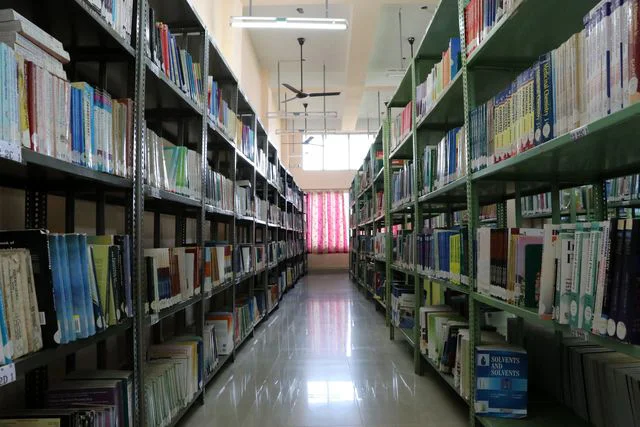
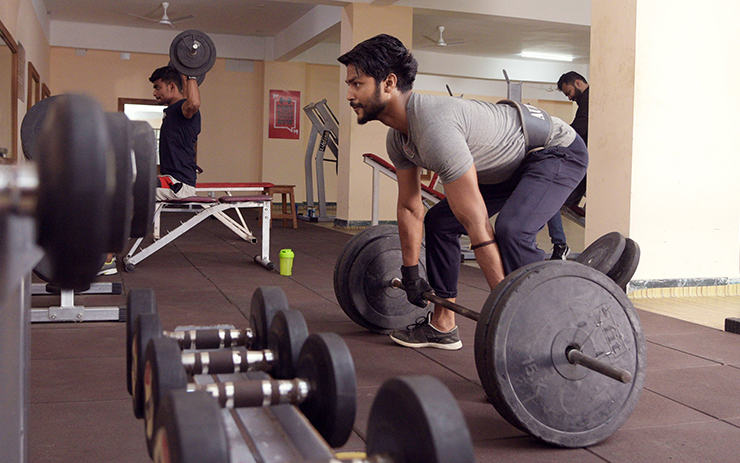
Some of our Facilities
  • Gym
  • ATM
  • Sports
  • Hostels
  • Transport
  • Healthcare
  • Yoga Center
  • Media Centre
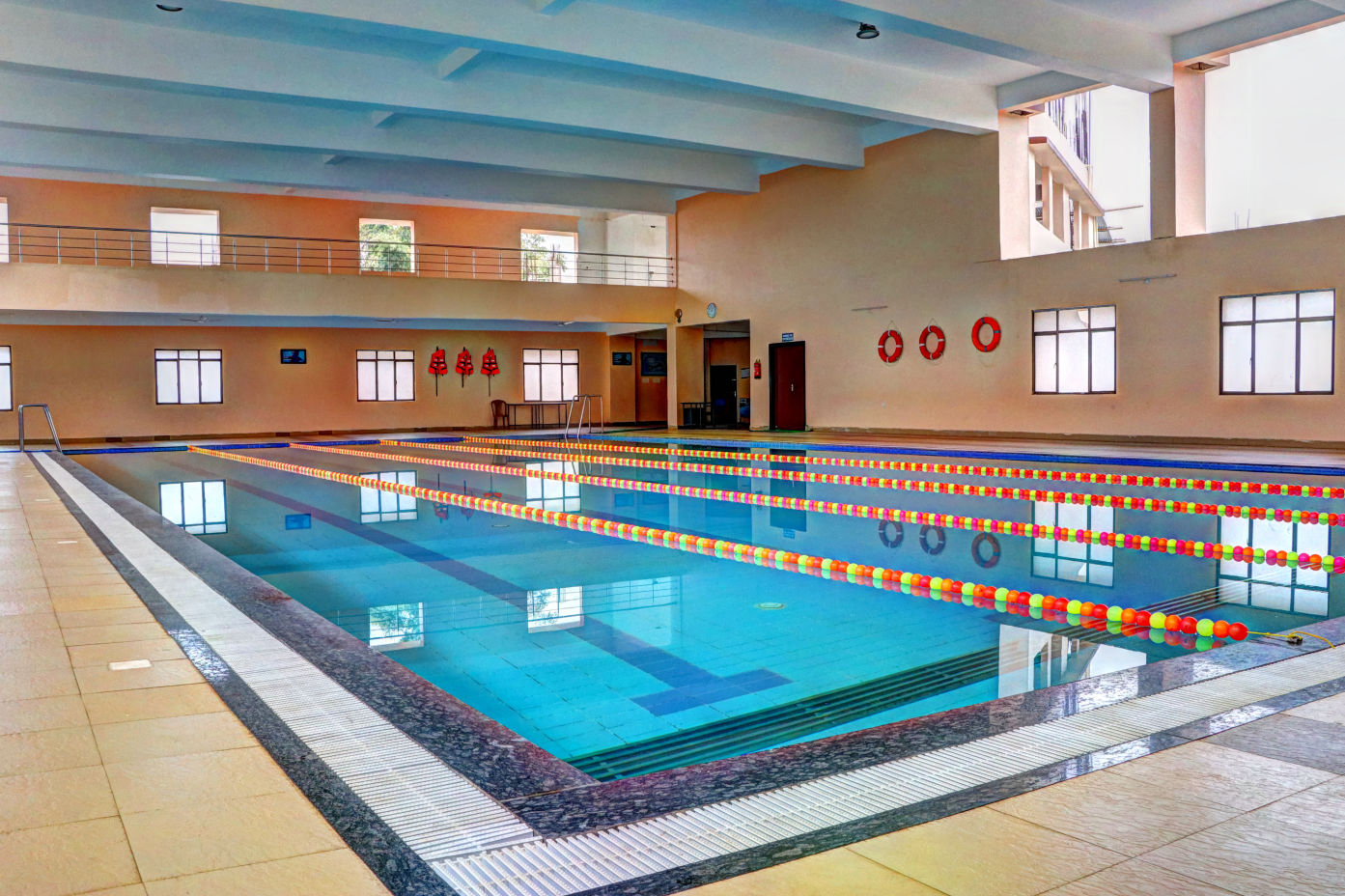
  • Swimming Pool
  • Central Library
  • Canteen & Cafeterias
  • ICT Enabled Classrooms
  • Well Equipped Laboratories
  • Auditorium & Seminar Halls

Start-Up &
Incubation Centre

The Start-Up & Incubation Centre at Assam down town University provides a supportive environment for young entrepreneurs to develop and grow their business ideas. The center provides mentorship, funding, and networking opportunities to help innovative ideas become successful businesses.

Rural Empowerment with SFURTI scheme

SFURTI scheme to support rural entrepreneurs and innovators, an initiative by the Ministry of MSME

TIDE 2.0 scheme for ICT-based startups

TIDE 2.0 scheme for ICT-based startups which provides a grant of Rs. 4L and Rs. 7L under EiR and Grant categories respectively, an initiative by the Ministry of MeitY.

dtVL Ideation interest-free loans up to Rs. 2 lakhs.

dtVL Ideation, an incubation program for early-stage entrepreneurs with a market-ready solution/product, offering interest-free loans up to Rs. 2 lakhs.

Innovation with Sprout UP program

Sprout UP, an incubation program for students, faculties, and researchers with innovative business ideas, prototypes, or technology solutions.


Icons Images
Job Creation
Icons Images
Support Start Ups
Icons Images
Govt and MSME Collaboration
Icons Images
International Tie-ups

Top Recruiters

What our Students say

Kailash Timsina
Student

"I am a BBA student of 3rd semester. I hail from Bhutan. I vow that I am having a great experience i...

Juliush Mushahary
Student

"AdtU is amazing. I am a BBA student of 2019-22 batch and I am just grateful for the amount of oppor...

Reshi Prasad Pokhrel
Student

Let us be grateful to the people and place who makes us happy. They are the charming gardeners whom ...

Debapriya Paul
Student

Currently I am pursuing MBA in Assam Down Town University. MBA is the professional course through wh...

Priti Jain
Student

AdtU is a university that focuses on giving knowledge, education and simultaneously making the stude...

Madhurya Bujar Barua
Student

The Assam downtown University has been a great learning experience. The university has provided me w...

Naeem Hussain
Student

My experience with AdtU has been splendid one indeed. Little needs to said about its scenic infrastr...

Dr Dipanjali Hazarika
Student

As a student I am very glad that I have got an opportunity to study here in Assam downtown universi...

Sakhyajit Roy
Student

My name is Sakhyajit Roy. I?m from Tripura. I joined the university on Auguest, 2017 as a student of...

Runi Bharadwaj
Student

I share immense pleasure to share my post graduate program experience in Assam down town University....

Jenifer Dhar
Student

AdtU is a platform where I got golden opportunities to feed my zeal for knowledge through the dynami...

Salehah Hussain Uthman
Student

I am fortunate to get an opportunity to study here in Assam Downtown University. The best thing abou...

Nisha Nirola
Student

Our university is one of the best place for developing ourselves in the field of research and acedem...

Liangsi Hallam
Student

ADTU is a university that is very good interms of infrastructure, academics and placements. Our tea...


Anushmita Kashyap
Student

It is one of best private colleges in North East India, it also provides a good environment for ed...

Dasanibha Mawphlang
Student

ADTU is a good University which provides the students with best quality lectures and ensures comfort...

Farhin zakia
Student

The environment of Assam downtown university is very pleasant.The department of BMLT is very good a...

Anamika Das
Student

The university has all the necessary facilities and amenities for students . The classrooms and the ...

Susmita Sinha
Student

Assam downtown University is well recognised all over india. In the ongoing pandemic situation it ha...
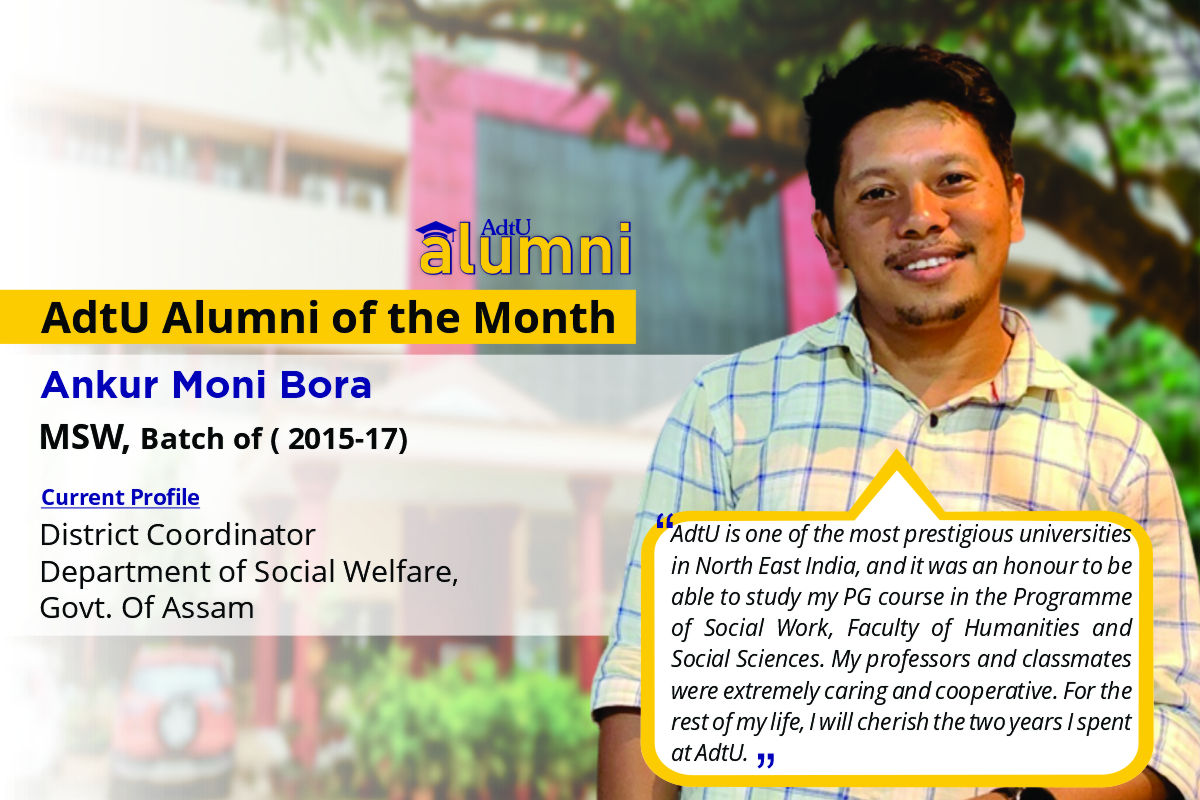
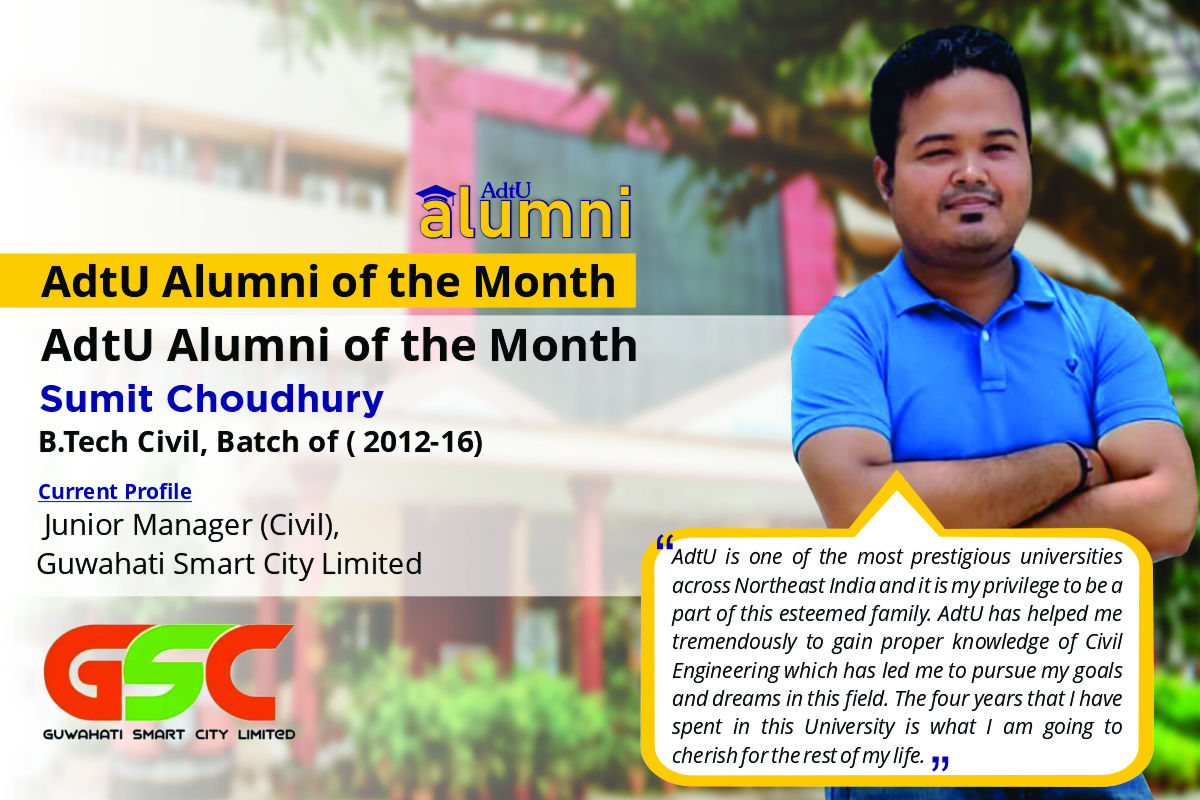
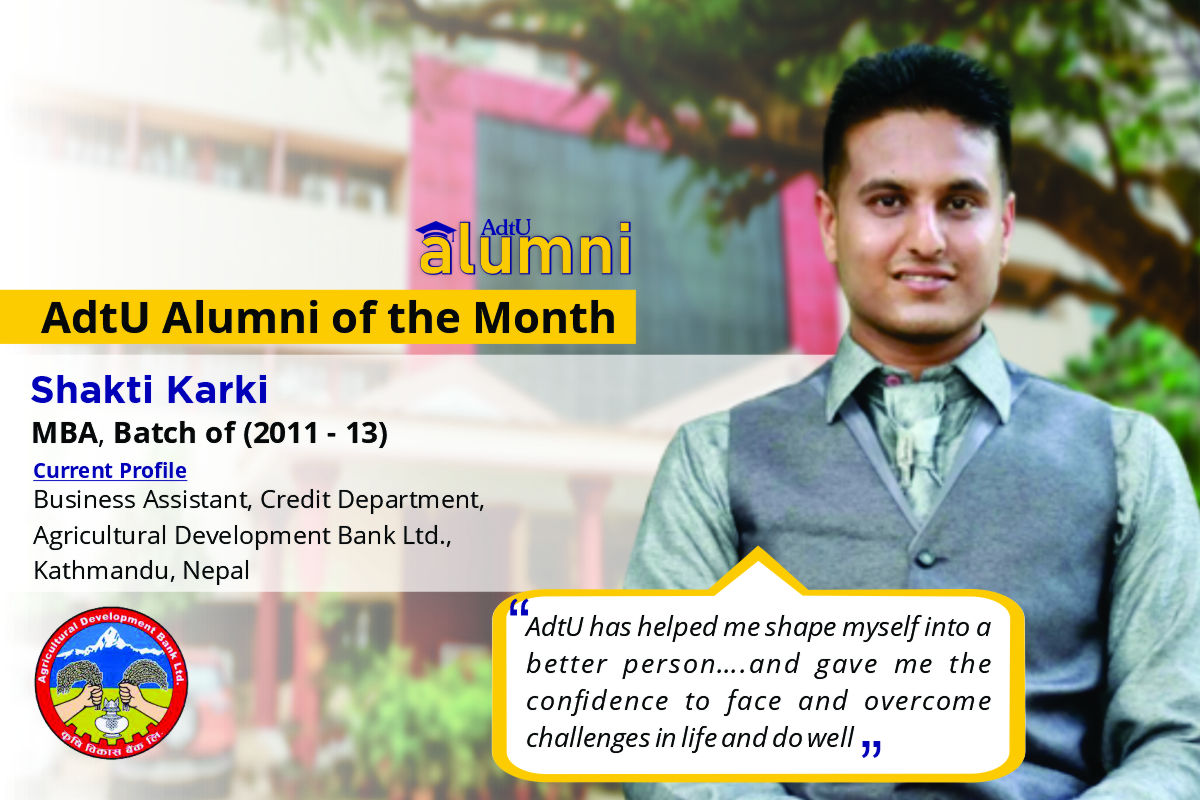
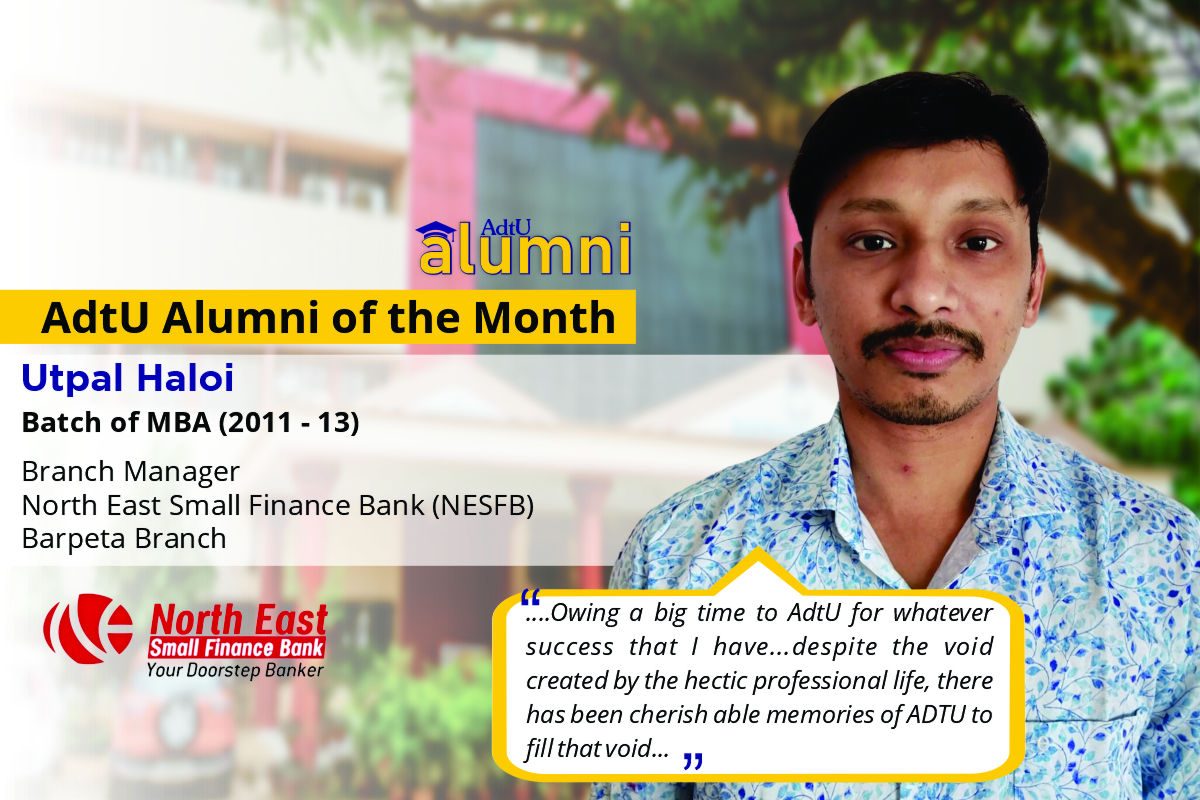
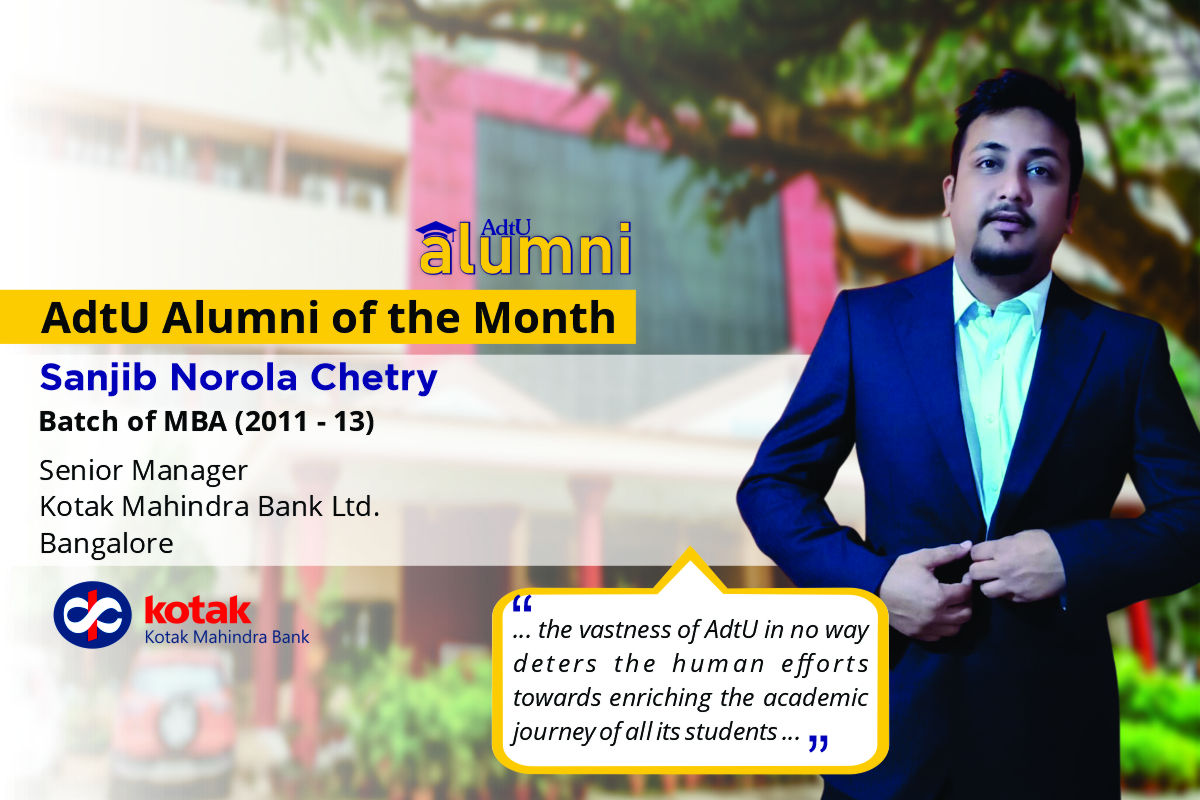
Alumni of the Month

Get Free Counselling Now