


Top Engineering Colleges in Assam with Good Placem...
08th Oct 2026
Physical education used to get treated as the one "easy" period in a school timetable. That's not really true anymore, and the career opportunities in physical education have grown along with that shift. Schools now hire dedicated PE staff seriously, the fitness industry has exploded, and sports itself has become a genuine profession in India, not just something you did before choosing a "real" career. Here's what a B.P.Ed actually opens up.
B.P.Ed. full form is Bachelor of Physical Education, a professional degree that trains students to teach, coach, and understand the science behind human movement, fitness, and sport. Traditionally, under NCTE norms, it's a 2-year programme taken after completing a separate Bachelor's degree, similar in structure to a B.Ed for teaching. That said, some universities, AdtU included, now offer a more direct route: a 3-year Bachelor of Physical Education & Sports (BPES) that students can join straight after Class 12, no separate degree required first. Worth knowing both versions exist before you start comparing colleges.
India's sports industry is expanding fast, with some estimates putting annual growth near 18% through 2026, and that's creating real jobs for coaches, trainers, and sports managers, not just athletes. Government pushes like- Khelo India and the Fit India Movement have made physical education a more serious, better-funded part of school curricula than it used to be. On top of that, the fitness and wellness industry, gyms, corporate wellness programmes, personal training, has grown into its own separate demand stream that barely existed a decade ago.
The coursework isn't just theory, students build a real foundation in sports science, anatomy, and physiology, learn structured coaching and training methodology, and pick up practical skills in sports psychology, first aid, and injury management, things you actually need on the ground with an athlete or a classroom of kids. Event and tournament management is usually part of it too, along with teaching pedagogy for anyone planning to work in a school setting, and fitness assessment techniques that carry directly into personal training or wellness coaching later.
The two routes have different entry requirements, so it's worth knowing which one applies before you apply. The traditional 2-year B.P.Ed generally requires a completed Bachelor's degree in any discipline, usually with a minimum of 50% aggregate marks (a little lower for reserved categories), along with proof of sports participation at the inter-college, district, or state level at most universities. AdtU's direct-entry Bachelor of Physical Education & Sports (BPES) works differently: students can join straight after Class 12 from any stream, no prior degree needed, though a basic fitness assessment or record of sports participation is often part of the admission process. Neither route has an upper age limit at most institutes, and neither requires NEET or a separate national entrance exam.
Still the most common path, and for good reason. Schools, colleges, and universities need qualified PE staff to run structured sports periods, prepare students for competitions, and manage physical fitness assessments, and demand here has only grown as PE gets treated more seriously in the curriculum.
Coaching a specific sport, cricket, football, athletics, badminton, whatever the specialisation, is a genuine full-time career path through schools, academies, and professional clubs, not just something people do part-time alongside another job.
The fitness industry's growth has opened this up considerably. Gyms, wellness centres, and increasingly individual clients all look for trainers with real formal training behind them.
Someone has to actually organise tournaments, manage sports facilities, and run athlete logistics, and B.P.Ed. graduates with an interest in the administrative side move into these roles regularly, often earning more over time than pure coaching roles.
Specialised academies training competitive and elite athletes need coaches and support staff who understand performance training specifically, not general fitness, and these roles tend to pay better once you've built a track record.
Not every B.P.Ed. career is a competitive sport. Community centres, recreational programmes, and public health initiatives all need people who can design and run physical activity programmes for the general public, including older adults and people managing health conditions through movement.
This is genuinely new territory. Online coaching platforms, fitness apps, and sports content creation have opened a career path that didn't really exist for BPEd graduates ten years ago, and graduates who can pair their coaching background with basic data or analytics skills, think performance tracking, video analysis, are increasingly commanding a real premium for it.
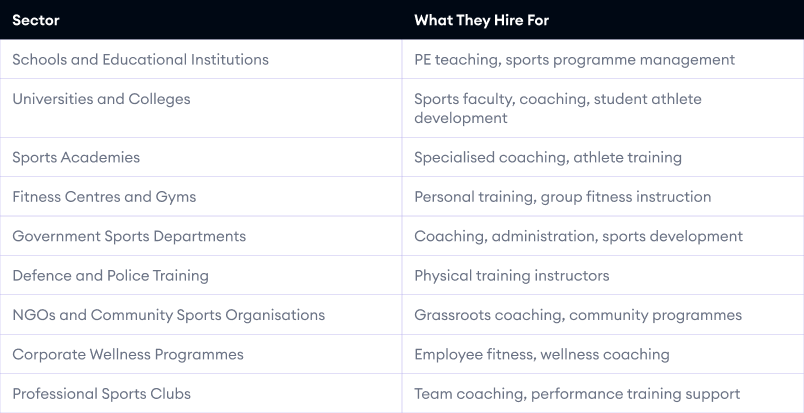
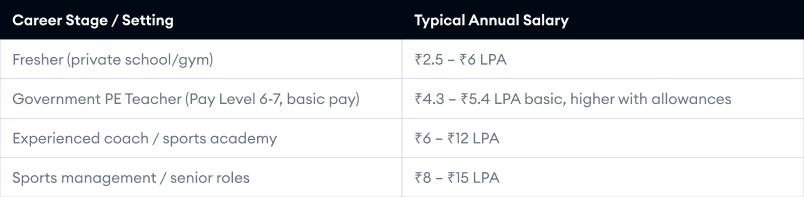
One thing worth knowing for 2026 specifically: graduates who can also handle basic sports analytics, performance tracking software, video analysis tools, tend to earn noticeably more than those who can't, since that skillset opens doors into IPL/ISL-adjacent performance analyst roles that a pure coaching background usually doesn't.
Assam down town University (AdtU) runs a Bachelor of Physical Education & Sports that students can join directly after Class 12, without needing a separate Bachelor's degree first, which genuinely shortens the path into this career compared to the traditional route many universities still require. The programme sits within a university holding NAAC A+ accreditation (CGPA 3.34) and UGC/AICTE recognition, with access to real sports infrastructure, indoor sports facilities, and coaching support built into student life on campus, not treated as an afterthought. AdtU's placement function also runs university-wide, and the 2026 outgoing batch recorded 900+ offers through 150+ recruiters. For students weighing a bachelor of physical education in Assam against options elsewhere, that combination of direct entry, real facilities, and placement support is worth factoring in. Admissions details are at apply.adtu.in.
Yes. There is a growth in the fitness industry, the government has stable job avenues through bodies like Sports Authority India (SAI) and KVS, and schools these days are taking physical education seriously. B.P.Ed has real and varied career options and definitely not one narrow path.
Sport-specific coaching certifications from national federations, first aid and sports injury management certifications, and increasingly, basic sports analytics or fitness technology certifications all add real value on top of the base degree.
Yes. Most gyms and fitness centers value a B.P.Ed more than a short-term personal training certificate, as it will give you a good grounding in fitness assessment and training methodology.
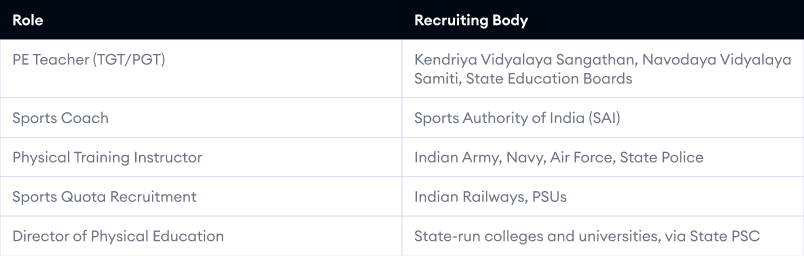
Yes, several. Kendriya Vidyalaya Sangathan and Navodaya Vidyalaya Samiti recruit PE teachers, the Sports Authority of India recruits coaches, and the armed forces and Railways both hire physical training instructors and sports quota staff regularly.
Not necessary for most entry-level positions but sport-specific coaching licenses or a Master's (M.P.Ed) will go a long way in boosting your chances of landing senior coaching, academic or high-performance training roles later on.
Generally yes, since most direct-entry B.P.Ed. programmes accept students from any stream after Class 12. Some universities do ask for a basic fitness or sports participation record as part of admission, so it's worth checking the specific institute's criteria.
Yes. Practical coaching sessions, hands-on sports training, and access to AdtU's sports facilities are built directly into the BPES programme structure, so students get real, supervised experience alongside their classroom learning rather than only after it.
AdtU offers direct entry after Class 12 through its Bachelor of Physical Education & Sports programme, backed by NAAC A+ accreditation, real sports infrastructure, and a placement record of 900+ offers through 150+ recruiters for the 2026 batch, giving Northeast India students a credible option without needing to relocate.


