

The primary objective of enhancing research activities at our university is to engage faculty, professionals, and students in consistent, high-quality research endeavors that result in publications in reputable journals. This initiative aims to bolster the university's academic reputation, foster innovation, and secure research funding from agencies like DST, DBT, ASTEC, AICTE etc. Additionally, it supports the organization of research-based seminars, workshops, and Faculty Development Programs (FDPs), guiding students in research-oriented projects, and cultivating a culture of knowledge sharing and collaboration. By aligning with global standards, the practice promotes continuous improvement and strengthens the university's dedication to research excellence.
Implementing the practice of enhancing research activities faced several contextual challenges. These included overcoming inconsistent research output among faculty and students, many of whom lacked the motivation or experience to engage in regular scholarly activities. Securing research funding from external agencies like DST, DBT, ASTEC, AICTE was also a challenge, requiring a strong track record and alignment with funding criteria. There was also a need to foster a culture of knowledge sharing and collaboration, as research efforts were often siloed within departments. The challenge was to create an integrated system that encouraged consistent research while providing the necessary support and recognition to sustain it, ultimately aligning with global academic standards and enhancing the institution's reputation.
In the context of Indian higher education, where research output and quality vary significantly across institutions, our university’s approach stands out for its comprehensive strategy to promote and sustain research excellence. Our practice not only motivates faculty and students to participate in scholarly activities but also aligns these efforts with broader institutional goals, including development, funding acquisition, and societal impact. Our approach is distinguished by its holistic integration of diverse research activities, making research a central component of the academic experience. Unlike traditional strategies that focus solely on publication output, our framework encompasses multiple facets of research development:
Funding Acquisition: We actively pursue external funding opportunities, securing grants from government agencies and industry partners. This financial support enables high-quality research projects and encourages faculty and students to explore innovative ideas.
Interdisciplinary Collaboration: By promoting cross-departmental and interdisciplinary collaboration, we foster a diverse range of research projects that are both innovative and impactful. This approach breaks down silos and enhances knowledge exchange among various academic disciplines.
Research-Based Events: The university organizes seminars, workshops, and FDPs centered on research themes. These events serve as platforms for faculty and students to present their findings, learn advanced methodologies, and stay updated on emerging trends.
Seed Funding: To further stimulate research, the university provides annual seed funding to faculty members. This support for early-stage research projects allows faculty to develop ideas and gather preliminary data, which can attract larger external grants in the future.
Research Faculty: We have taken strategic steps to recruit dedicated research faculty, enhancing our research capabilities and attracting significant research grants. These experts bring valuable experience that strengthens the university’s knowledge base and promotes collaborative research projects.
Appraisal/Awards Based on Research: Assam down town University has established appraisal and awards initiatives to recognize faculty members excelling in research, especially those with publications indexed in Scopus and Web of Science. Eligible faculty can apply for salary appraisal or career advancement twice a year, with applications reviewed through the ERP system. This process ensures that faculty achievements in research projects, awards, publications, and IPR activities are formally acknowledged.
Collaboration with National and International Bodies: With over 120 national and international Memorandums of Understanding (MoUs), our university leverages partnerships with research organizations and industries to enhance research opportunities, foster innovation, and facilitate global knowledge exchange.
This integrated approach ensures that research is seamlessly linked with teaching and learning, enriching the academic environment. By embedding research within our educational framework, we enhance our academic reputation and contribute significantly to societal development. Emphasizing both consistency and quality, we encourage faculty to pursue rigorous research that meets international standards, enhancing our university's reputation both nationally and globally. Our practice also provides targeted support for early-career researchers, including mentorship, training, and resource access. This is especially important in India, where young researchers often face limited guidance and infrastructure. By promoting funded research aligned with national priorities, we encourage collaborations that foster a dynamic and impactful research ecosystem.
The progress and success of our research initiatives are best showcased through visual representations of key metrics over recent years. Below is an overview of our research growth, illustrated through line and scatter plot graphs:
1. Paper Publications in Reputed Journals:
Visual Representation: A line graph displaying a consistent upward trend, highlighting the exponential growth in publications.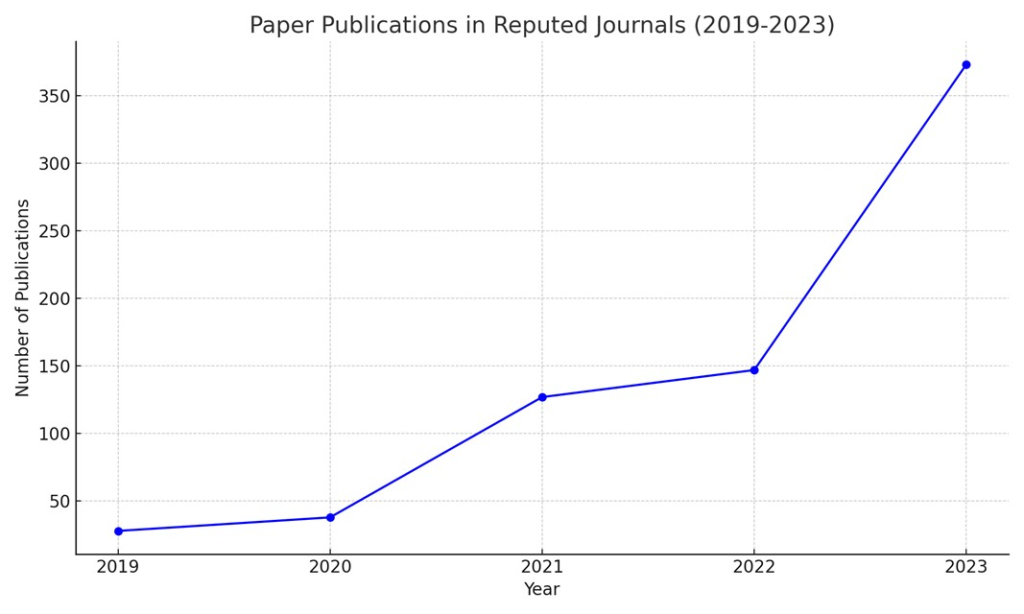
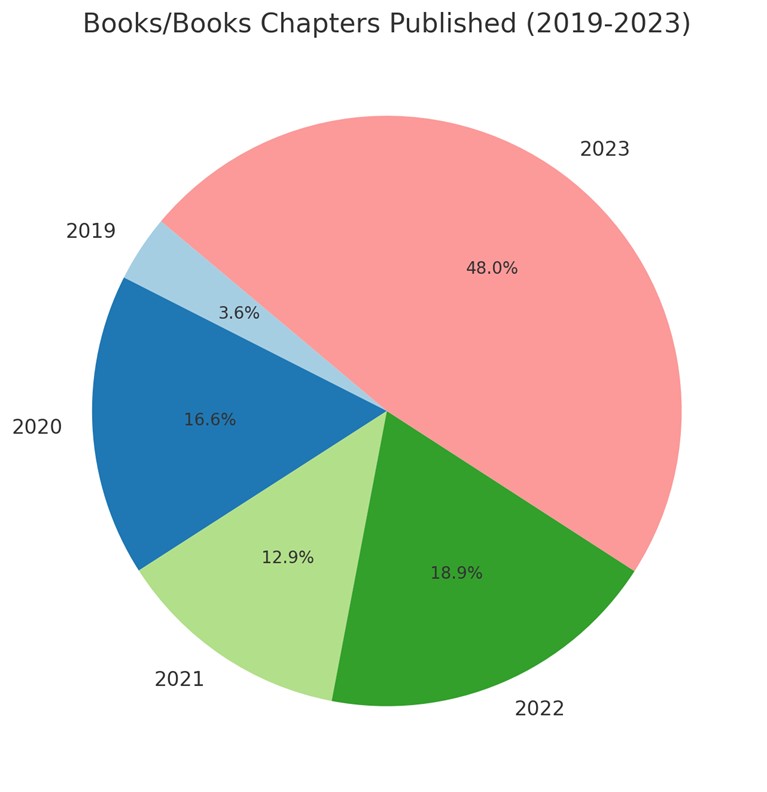
2. Books/ Books Chapter published:
Visual Representation: A pie graph showing a notable increase in the number of research papers presented, particularly from 2022 onwards.
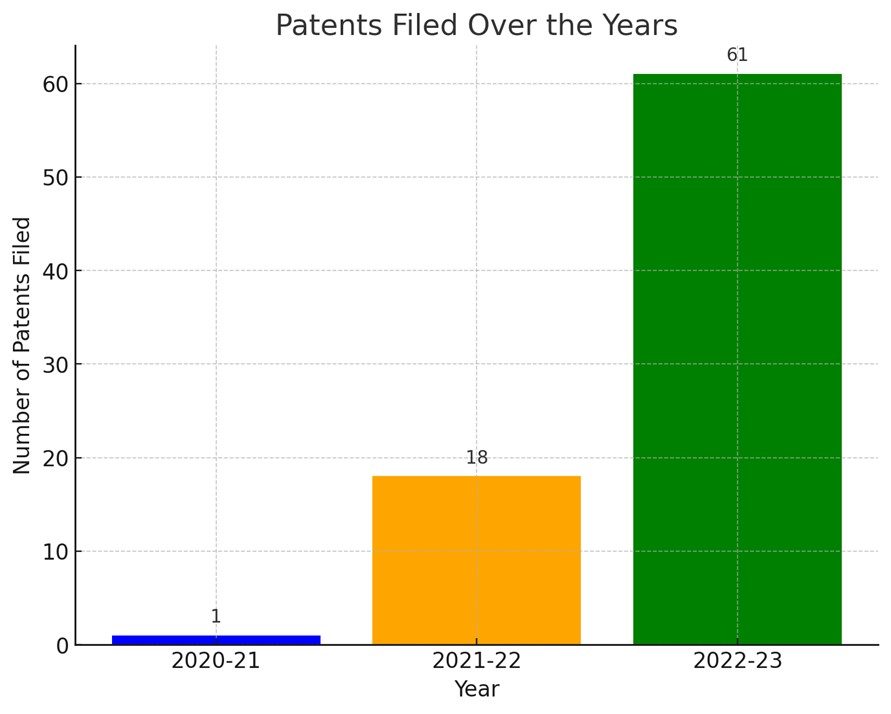
3. Patents Filed:
Visual Representation: A scatter plot emphasizing the sharp rise in patent filings, especially between 2021 and 2023.
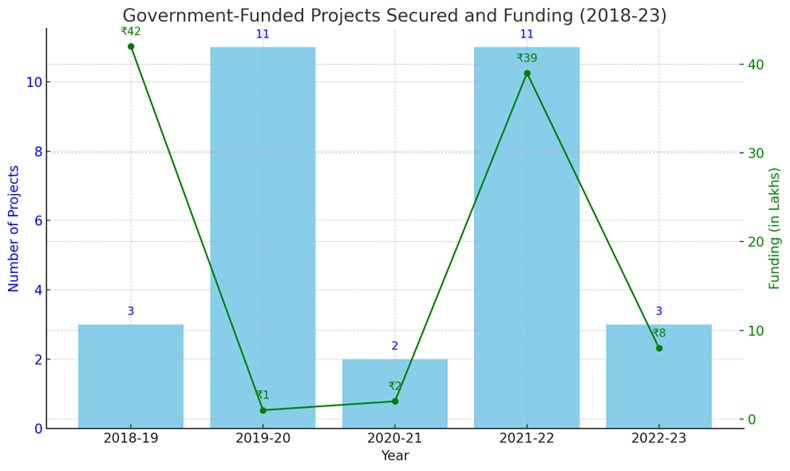
4. Government-Funded Projects Secured (Funding in Lakhs):
Visual Representation: A bar graph illustrating the fluctuating but significant funding received for government projects, with peaks in 2018-19 and 2021-22.
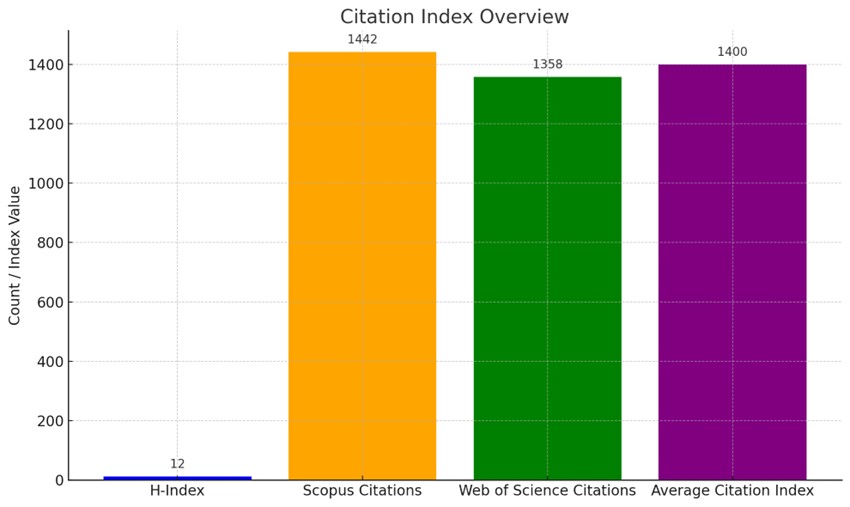
5. Citation Index:
H-Index: 12
Total Citations:
Scopus: 1442
Web of Science: 1358
Average Citation Index: 1400
Visual Representation: A line graph comparing the H-Index, Scopus, and Web of Science citations over the years, showcasing consistent citation activity.
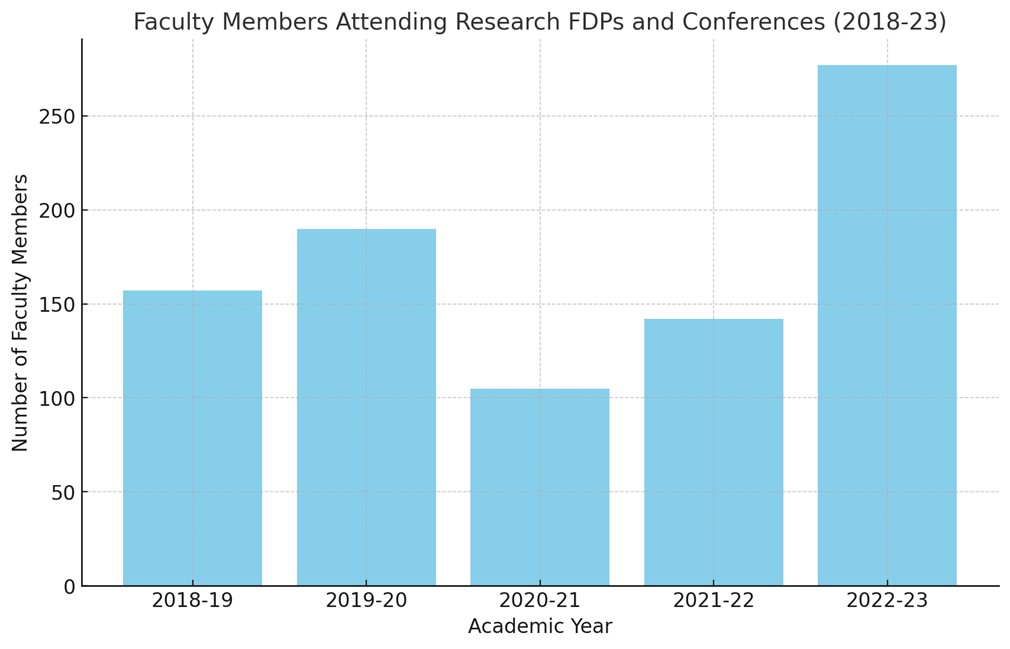
6. Faculty Members Attending Research FDPs and Conferences:
Visual Representation: A line graph highlighting the increase in faculty participation in research-oriented FDPs and conferences, with a significant rise in 2023.
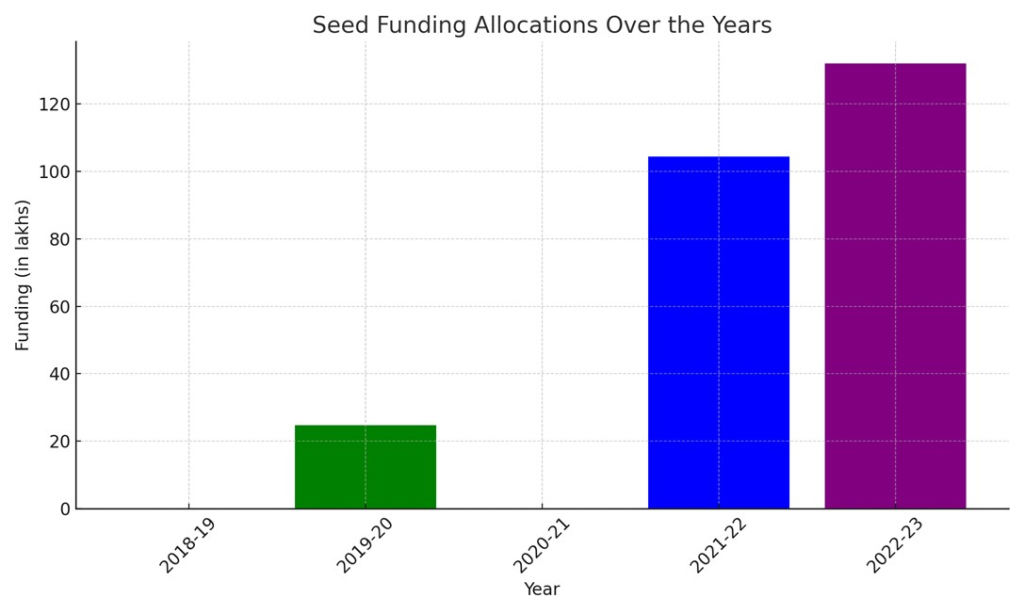
7. Seed Funding Allocations:
2018-19: ₹0 (No seed funding allocated)
2019-20: ₹24.70 lakhs
2020-21: ₹0 (No allocation due to the COVID-19 pandemic)
2021-22: ₹104.39 lakhs
2022-23: ₹132.01 lakhs
Visual Representation: A bar graph highlighting the increase in seed funding allocation.
The implementation of our best practice has been transformative, significantly enhancing our research environment through strategic investments in advanced laboratories, state-of-the-art equipment, and faculty development programs. However, challenges remain, such as limited access to government grants due to our status as a private university, the need for more research-oriented faculty members, and the difficulty faculty face in balancing teaching and research responsibilities despite support mechanisms like sabbaticals. To address these challenges, we require improved access to government funding, increased recruitment of research-focused faculty, more flexible teaching loads to support research engagement, and enhanced administrative support to streamline research processes. These resources are crucial for overcoming current barriers and further strengthening our research capabilities and impact.